
A public insurance adjuster works for the policyholder rather than the insurance company. In Texas they must hold a license issued under Texas Insurance Code Chapter 4102, and their fee is capped by statute: under Section 4102.104, a license holder may not receive a commission exceeding 10 percent of the amount of the insurance settlement on the claim. The Texas Department of Insurance states the same thing plainly, adding that the fee must be disclosed in the public adjuster’s written contract. So if you have been quoted 15 or 20 percent on a Texas roof claim, the number itself is the first thing to question.
This page explains the rules and the trade-offs. It does not tell you whether to hire anyone, and it names no firm.

What a public adjuster actually is
Three different people can be called an adjuster on the same claim, and confusing them is the source of most of the bad advice on this subject.
| Role | Works for | Paid by |
|---|---|---|
| Company or staff adjuster | Your insurance company | The insurer |
| Independent adjuster | Your insurance company, under contract | The insurer |
| Public insurance adjuster | You, the policyholder | You, out of the settlement |
A public adjuster inspects the loss, prepares and documents the claim, and negotiates the settlement on your behalf. That is the service. It is not free, it is not a lawyer, and it is not a roofer.
On that last point, Texas draws the line explicitly. Under Section 4102.163, a contractor may not act as a public adjuster or advertise to adjust claims for property on which that contractor is providing or may provide contracting services, whether or not they hold a license. The Texas Department of Insurance publishes this on its own roofing and insurance page. Anyone offering both roles on your roof is describing something Texas prohibits, which is covered further in should your roofer be there when the adjuster inspects.
The rules, with the citations
These are the parts worth knowing before a contract is in front of you. All of them come from Chapter 4102 of the Texas Insurance Code or from TDI’s own published material, verified at the time of writing.
A license is required. Section 4102.051 provides that a person may not act as a public insurance adjuster in Texas, or hold themselves out as one, without a license. There are narrow exemptions, including for Texas-licensed attorneys and for certain property and casualty agents acting on losses under policies they issued.
Violating the chapter is a criminal offense. Section 4102.206 makes an offense under the chapter a Class B misdemeanor, and provides that the same conduct may be prosecuted under other law as well.
The fee is capped at 10 percent. Section 4102.104 permits an hourly fee, a flat rate, a percentage of the amount paid by the insurer, or another method, with the total commission not exceeding 10 percent of the insurance settlement. TDI states that the fee may not exceed 10 percent of a claim settlement and must be disclosed in the written contract.
There is no percentage fee if the carrier pays policy limits almost immediately. Section 4102.104 also provides that a license holder may not receive a percentage-based commission where the insurer pays, or commits in writing to pay, policy limits within 72 hours of the loss being reported. In that situation, compensation is limited to reasonable payment for time and expenses.
Your name goes on the check, and only you endorse it. Under the same section, a person paying insurance proceeds must include the insured as a payee on the draft or check and require the insured’s written signature and endorsement, and a public adjuster may not sign or endorse a payment draft or check on behalf of an insured, regardless of any authorization. This is the provision most worth remembering. If anyone proposes handling the check for you, the statute already answers it.
There is a required contract. TDI requires public adjusters to use a contract meeting its requirements, referencing the Public Insurance Adjuster Contract form and Texas Administrative Code Section 19.708. A contract that does not disclose the fee is not compliant.

How to verify a license, without taking anyone’s word for it
TDI’s Consumer Help Line is 800-252-3439, and TDI’s consumer protection division routinely answers whether a person or firm is properly licensed for a regulated activity. TDI also maintains agent and adjuster license lookup on its website at tdi.texas.gov.
Before signing anything, three checks take about ten minutes:
- Ask for the full legal name on the license and the license number.
- Verify it with TDI, by lookup or by calling the help line, rather than accepting a photograph of a card.
- Read the fee line in the written contract and confirm it is at or under 10 percent of the settlement, in writing, with nothing added elsewhere for administrative charges.
If the person will not give you a name and number to verify, that is the end of the conversation.
When a public adjuster is generally relevant, and when they are generally not
This is a judgment call and this site will not make it for you, so what follows is the shape of the trade-off rather than a threshold.
The case for. The fee is contingent on the settlement, so the cost scales with the recovery. The value is highest where the claim is large or genuinely complex, where documentation and estimating are the bottleneck, where you do not have the time or inclination to run the process, or where the dispute has already stalled and the exchange has become technical.
The case against. On a straightforward claim where the damage is obvious, the scope is correct and the carrier is paying without argument, a percentage of the settlement buys you work that was going to happen anyway. And on a claim denied outright for a coverage reason, the question is not documentation but whether the policy responds at all, which is a different problem: an endorsement like the one described in the cosmetic damage exclusion in Texas is not overcome by better negotiation.
The number nobody can give you. Several pages ranking for this term quote figures for how much public adjusters increase settlements. This site does not repeat them, because none of them are sourced to anything verifiable and there is an obvious selection problem in measuring the outcome of claims that people chose to hand to a public adjuster. Treat any specific percentage improvement as marketing until someone shows you the study.
Where a public adjuster fits in the dispute routes
A public adjuster is not a fifth route alongside reconsideration, appraisal, a TDI complaint and legal advice. They are someone who does that work with you. Which routes are available still depends on what kind of dispute you are in, which is set out in what to do when a roof claim is denied in Texas and, for scope disputes, in partial approval and one-slope payouts.
Two points on timing. TDI’s guidance to a homeowner who disagrees with a settlement, telling the company why and sending supporting documentation such as a contractor’s estimate, costs nothing and is worth exhausting first for the simple reason that a percentage of a settlement is a lot to pay for a step you could have taken yourself. And the free routes stay free: TDI’s complaint process is a state consumer service, not a paid one.
The recruitment problem after a Texas hail storm
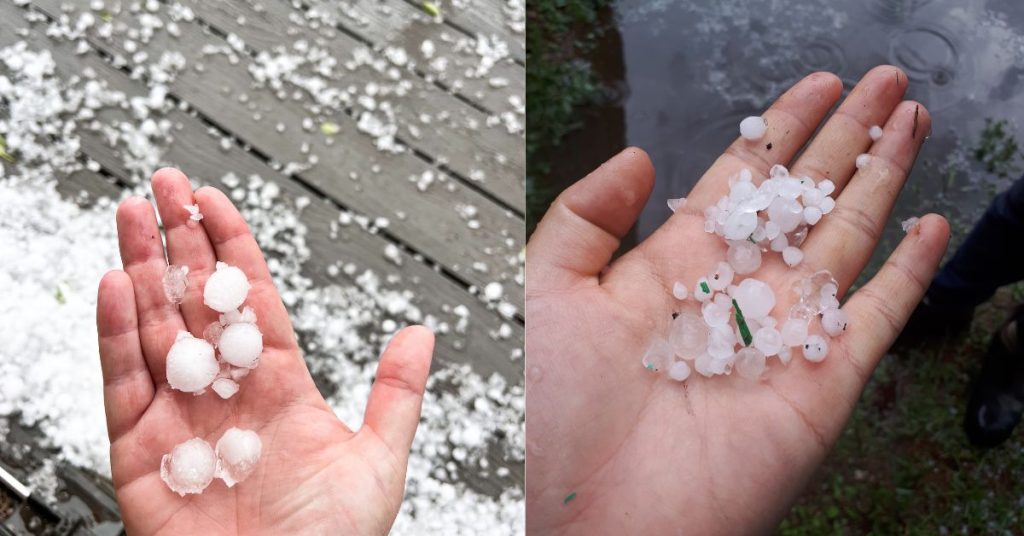
Public adjusting is a legitimate licensed profession, and after a major hail event the same doors get knocked on by people from every part of this industry. The pressure tactics do not distinguish between roles. Anything signed at the door under time pressure, whether it is a roofing contract, an assignment of benefits, or a public adjuster agreement, is signed in the one condition under which people regret signing things. The pattern is described in storm chaser red flags.
The specific things that should stop a conversation: an unwillingness to give a verifiable license number, a fee above the 10 percent statutory cap, a proposal to receive or endorse your settlement check, and any offer connected to covering or discounting your insurance deductible, which is a separate criminal matter under Texas law.
What this page does not do
It does not recommend a public adjuster, name one, or tell you that hiring one will improve your outcome. It does not tell you your claim is worth more than the carrier says. Those decisions belong to you and depend on numbers and documents only you have.
What it does is state the rules that apply to anyone who takes your claim on in Texas: a license under Chapter 4102, a fee capped at 10 percent of the settlement, a written contract disclosing that fee, your name on the check, and a criminal penalty behind the chapter. Verify the license with TDI before you sign. Other states set different caps and different rules, and nothing here describes how public adjusting works outside Texas. The whole claim process this sits inside is mapped in the Texas roof insurance claim, start to finish.
FAQ
How much can a public adjuster charge in Texas?
Texas Insurance Code Section 4102.104 caps the total commission at 10 percent of the amount of the insurance settlement on the claim, and TDI states the fee may not exceed 10 percent and must be disclosed in the written contract. The statute also bars a percentage commission where the insurer pays or commits in writing to pay policy limits within 72 hours of the loss being reported, allowing only reasonable compensation for time and expenses in that case.
Do public adjusters have to be licensed in Texas?
Yes. Section 4102.051 provides that a person may not act as, or hold themselves out as, a public insurance adjuster in Texas without a license, with narrow exemptions including Texas-licensed attorneys. Section 4102.206 makes an offense under the chapter a Class B misdemeanor.
How do I check whether a Texas public adjuster is licensed?
Ask for the license name and number, then verify it with the Texas Department of Insurance through its license lookup at tdi.texas.gov or by calling the Consumer Help Line at 800-252-3439, which routinely confirms whether a person or firm is properly licensed.
Can my roofer act as my public adjuster?
No. Under Section 4102.163, a contractor may not act as a public adjuster or advertise to adjust claims for property on which the contractor is providing or may provide contracting services, and TDI publishes this restriction directly. A roofer may inspect, describe damage and provide an estimate. Negotiating your settlement is a different license.
Can a public adjuster receive my settlement check?
Texas Insurance Code Section 4102.104 requires the insured to be included as a payee on the payment draft or check and to sign and endorse it, and provides that a public adjuster may not sign or endorse a payment draft or check on behalf of an insured, regardless of any authorization given. If someone proposes otherwise, the statute has already answered it.