

There’s a question I think every homeowner should be asking, whether or not they ever say it out loud: why should I believe any of this? You’ve read the founder story. You know I’m a roofer, not a marketing company. You’ve maybe read through the editorial standards page and seen the promises about honesty and accountability. But promises are cheap. What actually matters is the mechanism underneath them — the specific, checkable process that decides what gets called “good” on this site and what doesn’t.
This article is that mechanism, laid out plainly. Not a vague statement about “quality standards.” The actual method.
Why This Question Matters More Than It Seems
Here’s something most homeowners don’t realize until they’ve been burned once: almost every source of roofing information has a financial incentive baked into what it recommends, even when that incentive isn’t obvious on the surface.
A roofing company’s blog recommends whatever material they happen to install most, because that’s what’s profitable for them to sell, not necessarily what’s actually best for your specific roof. A manufacturer’s website recommends their own product line, dressed up as neutral advice, because that’s the entire point of the page existing. Review sites that seem neutral are sometimes quietly funded by paid placements, where a company that pays more shows up higher, regardless of actual quality. Even well-meaning homeowner forums can steer people wrong, because one person’s single good or bad experience with a contractor gets treated as universal truth, when in reality quality can vary wildly crew to crew, job to job, even within the same company.
Against all of that, “trust me, I’m honest” isn’t a strong enough answer. You need to know the actual filter something has to pass through before it earns a recommendation here. So here it is.
The First Filter: Have I Actually Seen It Work, Not Just Heard About It
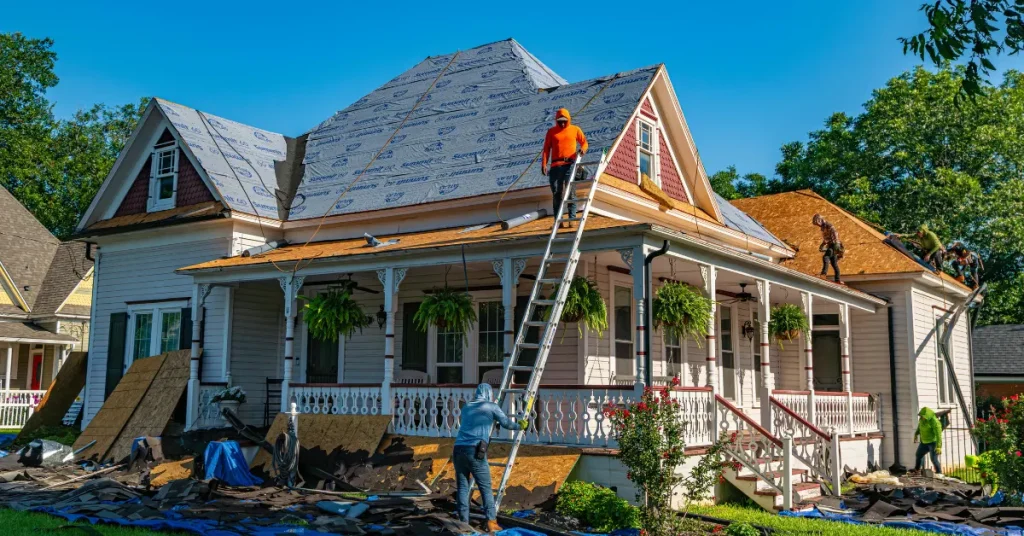
The single most important standard on this site is direct, firsthand experience. Before a material, a technique, or a general practice gets recommended here, the standard is that I’ve either installed it myself, inspected it in the field on a real Texas roof, or watched its long-term performance play out over years, not just read a spec sheet about it.
This matters more than it might sound like on paper. A lot of roofing content treats a manufacturer’s published specifications as the whole story — this shingle is rated for this wind speed, this material has this expected lifespan, this coating reflects this percentage of heat. Those numbers aren’t meaningless, but they’re measured under controlled conditions, and controlled conditions are not the same as fifteen years of actual DFW summers, actual hailstorms, and actual installation quality variance from crew to crew. Something can look excellent on a spec sheet and underperform in the field, and the only way to know that difference is to have actually watched it happen.
So when this site says a material holds up well, that’s not a restated manufacturer claim. It’s based on having seen it, or something functionally identical to it, actually survive — or fail to survive — real Texas conditions.
The Second Filter: Would I Recommend This to Someone I Actually Care About
This sounds simple, maybe even a little corny, but it’s a genuinely useful filter, and I use it literally, not as a metaphor. Before something gets written up favorably here, I ask myself whether I’d tell my own family to do exactly this, spend exactly this amount, or use exactly this material, knowing everything I know about the trade-offs involved.
This filter catches things that pure technical criteria sometimes miss. A material might technically perform fine but require a level of maintenance most homeowners realistically won’t keep up with, which means recommending it without that caveat sets people up to be disappointed years down the line. A cost-saving approach might work on paper but only if every other variable goes right, which isn’t a fair thing to present as a safe default recommendation to someone who’s trusting the guidance at face value.
If I wouldn’t put my own name behind a recommendation to someone whose trust actually matters to me, it doesn’t go on this site dressed up as solid advice.
The Third Filter: Does This Actually Hold Up Under Texas Conditions Specifically
I’ve said this elsewhere on the site, but it’s worth restating here specifically as a recommendation filter, not just a general philosophy: something being good in general is not the same as something being good here. A roofing product line can genuinely be excellent in a mild, temperate climate and still be a mediocre choice for a roof that has to survive DFW-style hail combined with sustained triple-digit summer heat combined with real wind events.
So the actual test applied here isn’t “is this a well-regarded product” in some generic sense. It’s “have I seen this specifically perform well under the conditions that Texas roofs actually face.” A material with an excellent reputation nationally still has to clear that specific bar before it gets recommended here as a good fit for your roof, not just a good product in the abstract.
What Disqualifies Something Automatically
Just as important as what earns a recommendation is what automatically rules one out, regardless of how it performs technically.
Any financial relationship that isn’t disclosed. If a manufacturer, contractor, or company ever pays for placement, sponsorship, or preferential mention on this site, that relationship will be disclosed plainly, every time, without exception. If a arrangement like that can’t be disclosed for some reason, it doesn’t happen — full stop. A recommendation with a hidden financial incentive behind it isn’t a recommendation, it’s an ad wearing a disguise, and that’s exactly the kind of thing this whole site exists to be different from.
A single good experience treated as a universal endorsement. One good job from one contractor, on one roof, isn’t enough to earn a blanket recommendation here. Contractor quality varies by crew, by region, by season, by how busy a company currently is. A recommendation on this site reflects a pattern observed over real time, not a single anecdote dressed up as a rule.
Anything I can’t personally stand behind with a straight face. If something requires me to overlook a real downside, minimize a legitimate risk, or present a mediocre option as excellent because it’s popular or profitable, it gets left out or presented with its actual trade-offs intact, not polished into something it isn’t.
How This Plays Out With Contractors Specifically
Materials are one thing, but the question homeowners actually care most about is usually “how do I find a contractor I can trust,” and I want to be very specific about how this site approaches that, because it’s the area with the most potential for abuse across the roofing content industry generally.
This site does not operate, and will not operate, as a pay-to-play contractor directory. A contractor does not get a favorable mention here because they’ve paid for placement, because they’re a partner of a broader marketing arrangement, or because of any relationship that would create pressure to say something more favorable than what’s actually true. If that ever changes in the future — if a genuine partnership or referral arrangement of any kind exists — it will be disclosed explicitly, in plain language, on the page itself, not buried in fine print.
Instead, what this site actually does with contractor guidance is teach you the underlying skill of vetting a contractor yourself, rather than just handing you a name and asking you to trust it blindly. That’s a deliberate choice, and I think it’s the more honest one. A specific contractor recommendation can go stale the moment ownership changes, ownership grows too fast to maintain quality, or a great crew moves on to different work. A skill — knowing what questions expose a bad actor, knowing what a fair contract looks like, knowing what licensing and insurance you should actually verify rather than take on faith — doesn’t go stale. It’s useful on this job and the next one, ten years from now, regardless of which specific companies exist by then.
What This Looks Like in an Actual Article
Let me make this concrete instead of abstract, because a page like this can start to feel like a policy document if it stays too theoretical.
Say an article on this site compares two roofing material categories for Texas conditions. Here’s what happened before that comparison ever got published: I drew on actual jobs where I’d installed or inspected both material types, specifically looking at how each held up against real hail events and real Texas summers, not just their published spec sheets. I asked myself honestly whether I’d put either one on my own house, and under what specific circumstances I’d choose one over the other. I made sure any real downside — higher upfront cost, more maintenance requirement, a specific vulnerability under certain conditions — got included plainly, rather than glossed over to make the recommendation feel cleaner and more decisive than reality actually supports. And nowhere in that comparison is there a hidden incentive nudging the conclusion toward whichever option happens to be more profitable for anyone, because there isn’t a financial relationship attached to either option in the first place.
That’s the actual process. Not a slogan about honesty — an actual filter that gets applied every time, before anything gets published as a recommendation.
Why I’m Willing to Say “It Depends” More Than Most Sites Will
One consequence of this whole approach is that a lot of the content on this site is going to resist giving you a single, clean, universal answer, even though a single clean answer is usually what ranks best in a search engine and reads more satisfyingly to a casual visitor. Roofing decisions genuinely depend on specifics — your exact location within Texas, your roof’s exact age and construction, your actual budget, your actual risk tolerance, whether you’re dealing with an insurance claim or paying out of pocket.
A site optimized purely for search traffic has an incentive to flatten all of that nuance into a confident, universal-sounding answer, because that’s what performs well and reads cleanly. This site is going to resist that flattening wherever the honest answer is genuinely “it depends, and here’s what it depends on.” That might occasionally make an article feel less decisive than a competitor’s version of the same topic. I think that’s the right trade to make, because a confident wrong answer is worse than an honest “here’s how to figure out which situation you’re actually in.”
What Happens When I Get Something Wrong
This mechanism isn’t perfect, and I’m not going to pretend it produces flawless content every time. Materials get discontinued or reformulated. Practices that seemed sound get reconsidered after seeing more jobs play out over time. A recommendation made with the best available information at the time can turn out, a year or two later, to have missed something important.
When that happens, the fix isn’t to quietly edit the page and hope nobody notices the change. It’s what’s already described on the editorial standards page: the article gets updated, and where the change is meaningful, that correction gets noted directly on the page. The mechanism described in this article is meant to make good recommendations more likely, not to claim a guarantee that doesn’t actually exist. What it does guarantee is that when something needs fixing, you’ll be able to see that it was fixed, and roughly why.
Why This Approach Costs More Than the Alternative, and Why I’m Doing It Anyway
I want to be honest about something most sites never admit: everything described in this article is slower, harder, and less scalable than the alternative. It would be considerably easier to write roofing content the way a lot of the industry actually does it — summarize what other articles say, lean on manufacturer spec sheets without personally verifying them against real field performance, and accept sponsorship or affiliate arrangements without much scrutiny about whether they actually create pressure on what gets recommended.
That version of this business would grow faster and cost less effort per article. I’m not building that version, because the entire reason RoofGuidance exists is the gap I described in the founder story — the fact that homeowners making genuinely expensive, genuinely consequential decisions couldn’t find a source that was actually accountable to them instead of to an advertiser or a sales funnel. Building this site the slower, more careful way is the only way that actually closes that gap instead of just rebranding the same problem with a friendlier tone.
What You Can Actually Do With This
If you take one practical thing from this article, let it be this: don’t just trust that any source, including this one, is being straight with you by default. Look for the actual mechanism behind a recommendation. Ask what incentive might exist behind the advice you’re reading. On this site specifically, that mechanism is what’s described above, and it’s not going anywhere — it’s the actual standard every piece of guidance here has to clear before it gets published, whether it’s about a shingle brand, a contractor red flag, or a repair-versus-replace decision on your specific roof.
If you ever come across something on this site that seems like it violates any part of what’s described here — a recommendation that seems to bend toward an unstated incentive, a claim that doesn’t hold up to scrutiny, a piece of advice that feels more like a sales pitch than honest guidance — say so. That accountability is the entire point of writing this mechanism down in plain language instead of just asking you to take honesty on faith.
— Pawel