
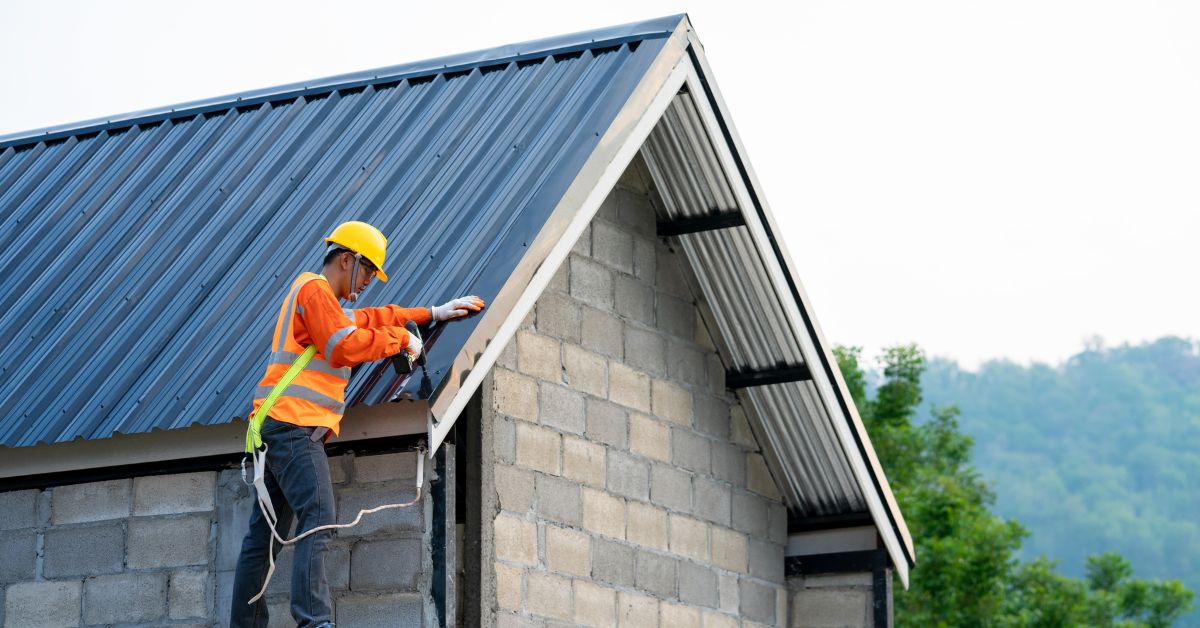
A roof insurance adjuster inspection usually takes under an hour. The adjuster inspects the roof and any related interior damage, photographs and measures what they find, and writes it up into a document called the scope of loss, which lists every item the insurer is prepared to pay for. That document, not the conversation on your lawn, decides what your claim is worth. Your job at the inspection is narrow: give them accurate information, hand over the documentation you already have, and make sure nothing real gets missed. You can ask for a copy of the scope afterward.
Everything else people worry about before an adjuster visit is smaller than it feels.

Who the adjuster is, and who they work for
The adjuster who arrives after you file is retained by your insurance company. Sometimes they are a staff employee, sometimes an independent adjuster contracted by the carrier, and after a large hail event across the Dallas-Fort Worth or Austin metros, frequently a catastrophe adjuster brought in from out of state and working through a queue.
None of that makes them your opponent, and treating them as one tends to make the visit worse rather than better. It does mean their assessment is the carrier’s assessment. There is a separate category of adjuster, the public insurance adjuster, who is licensed to work for the policyholder instead. That is a paid relationship with its own rules in Texas, covered in public adjusters in Texas.
What to have ready before they arrive
Have these in one place, printed or on your phone:
- Your claim number and your declarations page. The declarations page tells you your own deductible and settlement basis before anyone quotes you a number. If you have not read yours, reading your declarations page covers what each line does.
- Dated photographs from before the inspection. Ground-level shots of the soft metal, the gutters, any debris on the ground, and any interior staining. Documenting roof damage for insurance covers what makes a photograph useful rather than decorative.
- The date of the storm. Not “sometime in the spring.” A specific date, ideally supported by public weather records for your address, as covered in finding the hail storm date for your address.
- Records of the roof. Age, installer, material, prior repairs, prior claims, and any invoices you still have. Roof age and prior repairs come up in almost every inspection.
- Access. Unlocked gate, dogs inside, cars moved off the driveway, and a clear path around the house. Nothing improves a rushed inspection like not spending fifteen minutes of it on logistics.
- Interior access to the attic, if you have staining or suspect a leak.
What actually happens during the visit
The adjuster will typically walk the perimeter, photograph the exterior and the soft metal, get onto the roof if it is safe and accessible, mark and measure areas of damage, and check the interior if there is anything to see there. On asphalt shingles they commonly chalk off a test square and count impacts inside it. On tile, metal or low-slope roofs the method differs, because the damage does.
Some inspections are done by drone, and after very large storms some carriers use aerial imagery or a third-party inspection vendor instead of a site visit. That is a normal variation, not a slight.
You do not have to follow them around, and you should not go onto the roof. Being available at ground level to answer questions and to point out the interior damage they would otherwise not know about is the useful version of being present.
The thing to ask for, that most homeowners do not
Ask for the scope of loss.
The estimate the adjuster produces is a line-item document: squares of shingles, felt, ridge, drip edge, flashing, labor, debris removal, and so on, with quantities and prices attached. It is the actual basis of the settlement. When homeowners say a payment came back low, the reason is almost always visible in that document as a missing line item or a quantity that does not match the roof.
You are entitled to see how your claim was calculated, and asking for a copy of the estimate or scope of loss in writing is a normal request, not an aggressive one. Read it against the roof you actually have. It is also where you will see depreciation applied, which is the reason the first check is smaller than the total, explained in RCV versus ACV.
What to say, and the honest version of what not to say
Most pages that rank for this topic supply a script. The scripts mostly train you to avoid saying anything that could reduce the claim. The honest version of the advice is simpler and cuts in both directions.
Say what you know. The storm date. What you saw and heard. Where the water came in. When the roof was installed, if you know. What repairs have been done.
Say “I do not know” when you do not know. You are not expected to identify the cause of a crack, date a stain, or classify damage. Guessing at an answer creates a statement in the file that you cannot support later.
Do not overstate the damage, and do not let anyone else overstate it for you. This is not politeness, it is the actual boundary. A claim is a statement to an insurer about a loss. Describing damage that is not there, or attributing old damage to a recent storm, is misrepresentation. It is also the single fastest way to lose credibility on the parts of the claim that are genuine.
Do not agree to a number on the spot. The adjuster is gathering information at the inspection, not settling. There is nothing to accept yet.
Do not sign a contractor’s contract at the inspection either. Whatever is signed at your kitchen table during a hail week is signed under time pressure, which is the one condition under which people sign things they regret.
One legal point worth knowing before you decide who else stands in the yard: under Texas Insurance Code Section 4102.163, a contractor may not act as a public adjuster, or advertise to adjust claims, for property on which that contractor is providing or may provide contracting services. Whether to have a roofer at the inspection at all is worked through in should your roofer be there when the adjuster inspects.
What happens after they leave, and when
Texas sets deadlines on the insurer’s side of this, and they are published by the Texas Department of Insurance rather than being negotiable per claim:
| Stage | Deadline (TDI) |
|---|---|
| Acknowledge it received your claim | 15 business days |
| Approve or deny, after it has what it needs from you | 15 business days |
| Extension, if it tells you why in writing | Up to 45 more days |
| Pay, after it agrees to pay | 5 business days |
| Weather-related catastrophe | TDI can extend these by 15 more days |
A denial must be given in writing with the reason. Those deadlines are Texas rules and do not describe how any other state handles the same claim.
If the clock runs past those windows with no contact, that silence is itself something you can raise with TDI, whose consumer help line is 800-252-3439. The wider process this inspection sits inside is mapped in the Texas roof insurance claim, start to finish.
What this page cannot do for you
It cannot tell you whether your damage will be approved, what your roof is worth, or what the adjuster will conclude. Those depend on your policy, your roof, and the inspection itself. What it can tell you is that the inspection is an evidence-gathering visit rather than a negotiation, that the scope of loss is the document that matters, and that the most valuable thing you bring to it is accurate information you can support. Sources here were verified at the time of writing against the Texas Department of Insurance and the Texas Insurance Code.
FAQ
How long does a roof adjuster inspection take?
Commonly under an hour for a single-family home, though a large or complex roof, interior damage, or a catastrophe adjuster working a full schedule can change that in either direction. The length of the visit is not an indicator of the outcome.
Should I be home when the adjuster inspects my roof?
Being available is useful, particularly if there is interior damage the adjuster would not otherwise see, and if you have documentation to hand over. You do not need to shadow the inspection, and you should not go onto the roof.
Can I get a copy of the adjuster’s report?
You can ask for the estimate or scope of loss, and it is a routine request. That document lists the line items and quantities behind your settlement figure, which is where an underpayment usually becomes visible.
What if I disagree with what the adjuster found?
The Texas Department of Insurance suggests telling the company why you disagree and providing supporting documentation, such as a contractor’s estimate, in case something was overlooked. Beyond that there are further routes, including the appraisal process in your policy and a complaint to TDI. Which is appropriate depends on whether the disagreement is about coverage or about the amount.
Do I have to let the adjuster onto the roof?
Access to inspect is a normal part of the claim process, and refusing it will generally stall the claim rather than help it. If there is a safety reason the roof should not be walked, say so, and expect a drone or aerial alternative rather than no inspection.