
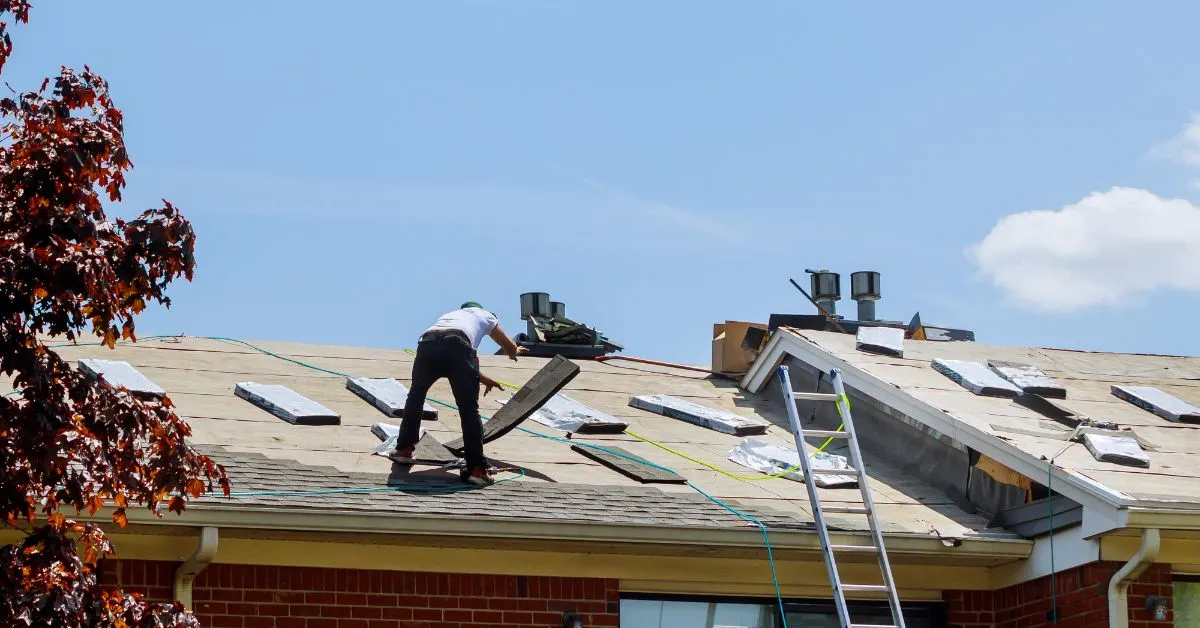
After a hail storm, whether you repair or replace your roof comes down to three things, in this order: how bad the damage actually is, how old the roof already was, and whether an insurance claim is involved. If the damage is localized to one slope and the roof is young, a repair is usually the right call. If the hail bruised shingles across most of the roof, or the roof was already past its useful life, replacement is honest, not an upsell. And if you carry wind and hail coverage, the insurer's own inspection often decides the outcome before you do. This guide walks you through that decision the way a roofer works through it, minus the part where someone is trying to sell you a new roof.
One thing to be straight about before we start. This is not adjuster advice and it is not legal advice. What this guide does is show how the repair-or-replace call is actually made in the field, in Texas, so you can tell a fair recommendation from a padded one.
Repair vs replace after hail: the quick decision
Most Texas hail decisions fall into one of these buckets. Find yours, then read the sections below for the "why."
| Your situation | Likely honest call |
|---|---|
| A few impact marks on one slope, roof under about 10 years old | Repair |
| Scattered granule loss, no cracked or bruised shingles, roof fairly new | Often no emergency at all, monitor and document |
| Widespread bruising across multiple slopes | Replace |
| Roof already 18 to 25+ years old, any real hail hits | Replace (it was near the end anyway) |
| Damage on 25 to 30% or more of a single roof plane | Replace that plane at minimum, usually the roof |
| Repair estimate creeping toward a quarter of a full replacement | Replace, the math flips |
| Active leak into the house | Emergency repair now, decide long term after |
These are starting points, not verdicts. The rest of this article is how a roofer separates the top row from the bottom row without walking into a "you need a whole new roof" reflex.
First: is it functional damage, or cosmetic?
This is the only distinction that decides whether hail matters. A roofer who does this for a living is looking for two very different things.
Functional damage means the hail actually shortened the life of the shingle. The clearest example is bruising: a hailstone hits hard enough to fracture the asphalt mat underneath the granules, even when the surface still looks intact. You often feel a bruise before you see it, like a soft spot. Bruising and cracked shingles are the kind of damage that lets water in over time, and they are consistently treated as functional by inspectors.
Cosmetic damage is surface stuff that looks bad but has not changed how the roof sheds water. Light granule scuffing, dents on soft metals like gutters and vents, marks that photograph ugly but leave the shingle mat sound. Nobody who is honest calls that a roofing emergency by itself.
Here is the nuance the sales pages skip: granule loss lives in a gray area. Losing a patch of granules does expose the asphalt to more UV and can shorten the shingle's life. So it is not "nothing." But scattered granule loss on an otherwise healthy roof is not the same as a mat full of bruises, and treating every bare spot as a reason to tear off the whole roof is exactly the reflex you should be suspicious of. If the only thing wrong is some lost granules, the right move is often to document it, keep the photos, and watch it, not to sign a replacement contract that afternoon.
The test-square rule adjusters actually use
You will see one number all over the internet: seven to ten hail hits inside a ten-foot by ten-foot square. That is the rough convention many insurance adjusters use as a replacement trigger. It is an industry rule of thumb, not a Texas law, so treat it as "how the person paying the claim tends to think," not as gospel.
What it means for you is practical. An adjuster does not eyeball your whole roof and guess. They chalk off test squares on each slope and count functional hits inside them. Hits concentrated on one slope can mean a one-slope repair. Hits spread across every square on every slope point to replacement. This is also why a contractor's opinion and an adjuster's opinion can diverge, and why the gap between them is your real risk. More on that below.
The age math: why the same storm means repair at 5 and replace at 15
Age is the quiet factor that flips a lot of these decisions, and it is the one homeowners forget.
Most asphalt shingle roofs in Texas are built to last somewhere in the 15 to 25 year range, and our sun and heat push toward the shorter end of that. The same storm that puts a handful of hits on a five-year-old roof, clearly a repair, can be the final straw on a fifteen-year-old roof that was already brittle and losing granules from age. On an older roof, hail does not have to do as much to justify replacement, because there was not much life left to protect.
There is a blunt version of this. If your roof was already 20-plus years old, a hail claim is often the moment it gets replaced, and that is legitimately the right outcome. The storm did not so much destroy a good roof as end a tired one. That is not an upsell. The trick is knowing the difference between "old roof, real damage" and "decent roof, oversold damage," and age is how you tell.
When a repair is genuinely the right call
Repair is the honest answer more often than roofing ads suggest. It usually makes sense when:
- The functional damage is limited to one slope or one area.
- The roof is relatively young and otherwise in good shape.
- Your shingles are still available and can be matched reasonably well.
- The repair cost is a small fraction of a replacement, not creeping toward it.
On cost, I will only give you honest ranges, because anyone quoting you an exact number on the internet is guessing about your specific roof. A targeted repair often lands somewhere from a few hundred dollars into the low thousands, while a full tear-off and replacement in the DFW area commonly runs well into five figures. Those are ballparks to set expectations, not a quote. The only numbers that matter are the ones on written estimates for your actual roof, and you want more than one of them. Get at least two or three written quotes before you decide anything.
When replacement is genuinely justified
Sometimes replace is simply correct, and I am not going to pretend otherwise just to sound like the anti-roofer. Replacement is the honest call when:
- Bruising or cracking is spread across multiple slopes, not one spot.
- Roughly a quarter of a single roof plane or more shows functional damage. At that point, patching stops making sense.
- The roof was already near the end of its service life.
- The repair estimate approaches about a quarter of what a full replacement costs. Once you are spending replacement money on a patch, replace.
There is also a repair reason nobody selling you a quick fix likes to mention: matching. Shingles weather. A five- or ten-year-old Texas roof has faded and lost granules across its whole surface. New shingles from the same line will not match that aged color, and sometimes the exact product has been discontinued. So a "cheap" partial repair can leave you with an obvious patchwork slope that also does not seal or age evenly. When damage is widespread, the impossibility of a clean match is a real, non-sales reason a repair fails and replacement wins. If you want the deeper version of when a premium impact-rated shingle is worth paying for, see our breakdown at the honest math on Class 4 shingles.
The trap: replacing before the insurer agrees it is functional damage
This is the section the roofing blogs cannot write, because it works against their own incentive. Read it twice.
A roofer gets paid to replace roofs. That is not an accusation, it is just the incentive. When the person inspecting your roof only makes money if the answer is "replace," you should expect the answer to lean toward replace. It does not make them crooks. It means you get a second, independent read before you commit five figures.
The bigger trap is a timing one. If you carry an insurance claim, the insurer's adjuster decides what they will pay for, and they are judging functional damage, not what a contractor calls damage. In Texas this gap has gotten sharper because some policies now carry a cosmetic damage exclusion. Under an endorsement like the ones adopted in Texas, if hail leaves marks that do not affect the roof's ability to keep water out, the carrier can deny the claim as cosmetic. The functional-versus-cosmetic argument is the single most contested piece of Texas hail claims right now.
So the worst outcome is this: you let an eager contractor tear off the roof before the adjuster has documented it, the adjuster later rules the damage cosmetic or below your deductible, and now you own a replacement bill with no claim behind it. Do not let anyone remove evidence of the damage until it has been inspected and documented. If you are still deciding whether a claim even makes sense, we cover that separately in should you file a roof insurance claim.
One more Texas-specific thing to know. Since 2019, House Bill 2102 has made it a crime for a contractor to waive, absorb, or "eat" your insurance deductible. So if a roofer knocks on your door promising a "free roof" by covering your deductible, that is not a deal, it is an offer to break the law, and it is a bright red flag about everyone else they will do on your job.
What to do, step by step, before signing anything
- Do not climb up there. Assess from the ground and from photos. A roof after a storm is slick and you are not insured to be on it. If you need eyes up top, that is what a reputable inspector or your adjuster is for.
- Document first. Date-stamped photos of the roof, the gutters, the soft metals, and any dents on your car or fence. Soft-metal dents help establish that hail of a damaging size actually fell.
- Check your policy for your wind and hail deductible and for any cosmetic damage exclusion before you call anyone. Know what you are working with.
- Get a real inspection, and if a claim is in play, try to have your documentation ready when the adjuster comes.
- Get two or three written estimates. Comparable ones. If you are not sure how to line them up, read how to read a roofing estimate.
- Be very careful with door-knockers in the days right after a storm. Some are legitimate. Many are not. Our guide to storm chaser red flags covers how to tell.
- Then decide, using the buckets at the top of this page. Repair if the damage is small and the roof is young. Replace if it is widespread or the roof was already old.
If you want to understand why this site exists and why I write it this way, with no roof to sell you, that is on the about page.
FAQ
How long after a hail storm can I file a roof claim in Texas?
Texas policies generally give you a window to file, but it is usually best measured in months, and sooner is always better because damage is easier to prove before more weather piles on. Do not wait. Check your specific policy for its filing deadline and reporting requirements, since terms vary by carrier.
Will a roof repair void my shingle warranty?
It can, depending on the manufacturer and who does the work. Manufacturer warranties often require repairs be done with matching approved materials and, in some cases, by a certified installer. Ask the roofer in writing how the repair affects your existing warranty before they start, and keep the paperwork.
Is dented gutters or flashing proof my shingles are damaged?
Not by itself, but it is useful evidence. Dents on soft metals like gutters, vents, and flashing show that hail large enough to do damage actually fell on your property, which supports a claim. The shingles still have to be inspected on their own for functional damage like bruising or cracking. Soft-metal dents help the case, they do not close it.
My contractor says replace but I only see a few marks. Who is right?
Possibly both, possibly neither, which is why you get an independent second opinion and, if a claim is involved, let the adjuster document the roof. The honest test is whether the damage is functional and how widespread it is, not how confident the person selling the roof sounds. Widespread bruising justifies replacement; a few cosmetic marks on a young roof usually does not.
Can a roofer pay my insurance deductible so the roof is "free"?
No. Under Texas House Bill 2102, it is illegal for a contractor to waive, rebate, or absorb your deductible, and doing so is a misdemeanor. Any roofer offering a "free roof" this way is telling you they are willing to break the law, which is all you need to know about them.