
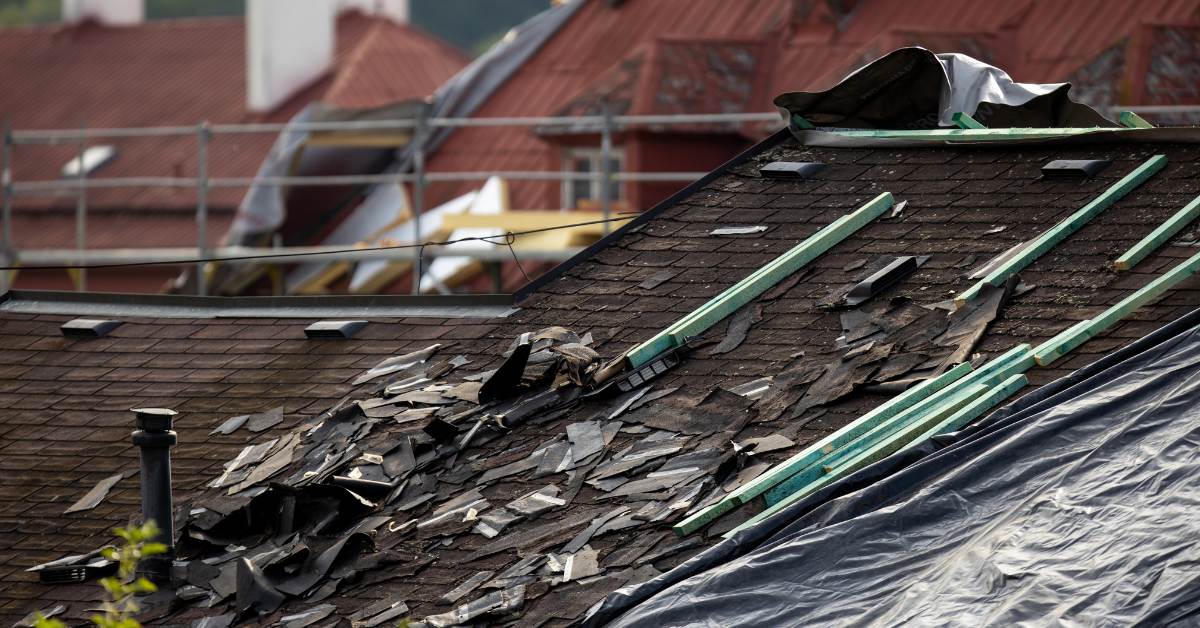
You can learn a real amount about hail damage without ever leaving the ground: check soft metal first (gutters, vents, the AC unit), look for granules collecting in downspouts or flower beds, and scan the shingles with binoculars for missing pieces or color changes. What you cannot do from the ground is confirm functional damage, the bruising and cracking under the surface that actually determines whether a repair or claim is justified. A ground check tells you whether something is worth a professional look. It does not replace one.
That distinction matters more than most checklists admit, because a ground check that finds nothing does not prove your roof is fine, and a ground check that finds plenty does not prove you have a claim. Here is how to use it for what it is actually good for.
Start with soft metal, not the shingles
This is the part most people skip, and it is the most reliable evidence you have from ground level. Hail dents metal before it visibly damages asphalt shingles, because metal is softer and shows an impact immediately, while a shingle can absorb the same hit and only crack underneath where you cannot see it.
Walk the perimeter of your house and check:
- Gutters and downspouts. Look for small, round dents, especially on the top-facing surfaces.
- Roof vents and flashing. Metal pipe boots, ridge vents, and flashing dent easily and are usually visible without a ladder.
- The AC condenser's fins. The thin aluminum fins on the outside unit bend and mark from hail that would barely show on a shingle.
- Window screens, the mailbox, a grill lid, or patio furniture. Any painted or bare metal surface in the open is a witness.
If you find a cluster of fresh dents on two or three of these, that is strong, honest evidence that hail large enough to matter fell on your property, which is useful whether or not you end up filing a claim. If you find nothing dented anywhere, that leans toward a smaller event that may not have reached damaging size, though it is not a guarantee either way.
What to look for on the shingles, and why it is unreliable
From the ground or with binoculars, look for shingles that are missing, curled up at the edges, or a different color or texture than the rest of the slope, which can indicate exposed mat or granule loss. Debris on the ground that looks like broken shingle pieces is also worth photographing.
Here is the honest limit: the damage that matters most to a roofer or an adjuster is often a bruise, a soft spot under the shingle surface where the hail fractured the asphalt mat without breaking through it. That kind of damage frequently looks like nothing at all from twenty feet away, and sometimes looks like nothing at all from three feet away. You are not going to catch it with binoculars, and neither would most homeowners standing on the roof itself. This is exactly why "the shingles look fine" is not the same as "the roof is fine," and it is the whole reason a proper distinction exists between what shows and what actually shortened the roof's life. That distinction is covered in full in functional versus cosmetic hail damage, and it is worth reading before you decide the roof looks okay.
Granules: the ground-level clue most people miss
Asphalt shingles are coated in granules that protect the mat underneath from UV light. Hail knocks some of these loose even on shingles that are otherwise sound, and a fresh accumulation is a useful, easy-to-check sign.
Look in your gutters if you can see into them from a ladder set safely on the ground (not the roof), in downspout splash areas, and in flower beds or mulch directly below the roofline. A noticeable pile of dark, sandy granules that was not there before the storm is a real signal. It is not, by itself, proof of functional damage, since some granule loss happens gradually over a roof's life anyway. But a sudden, fresh accumulation right after a hailstorm is worth documenting and worth mentioning to whoever inspects the roof.
What binoculars actually help with, and what they do not
Binoculars are genuinely useful for two things: spotting missing or displaced shingles, and noticing a slope that looks visibly different in color or pattern from the rest of the roof, which can indicate a concentration of impacts or granule loss in one area. That is a real, honest use.
What binoculars will not do is let you see a bruise under the shingle surface, tell you whether a mark is one storm or accumulated wear from several years, or substitute for someone qualified physically checking the roof deck and flashing. Treat what you see through them as a reason to get a professional look, not as a verdict.
The honest limit of a ground check
A ground check is a screening tool, not a diagnosis. It is genuinely possible for a roof to carry real, claim-worthy functional damage while showing almost nothing from ground level, especially on a roof with dark shingles or on a cloudy day. It is also possible to see a scattering of dented gutters and lost granules and still have a roof that is fundamentally sound, with damage that turns out to be cosmetic rather than functional.
That uncertainty is normal, and it is the reason a professional inspection exists as a separate step. The ground check's job is to tell you whether that next step is worth taking, not to answer the repair-or-replace question by itself.
What to do with what you found
Photograph everything you found, with the date, before you do anything else. If you found dented soft metal, missing shingles, or fresh granule accumulation, that is enough evidence to justify calling for a real inspection. If you found nothing at all, it is reasonable to hold off and simply watch the roof for a few weeks rather than book an inspection out of pure anxiety.
Either way, do not let anyone talk you into a decision about repair or replacement based on a ground check alone, yours or a contractor's. That call depends on functional damage, roof age, and how widespread the damage is, and it is covered fully in hail damage: repair or replace. And whatever you find, remember the one rule that does not change: do not climb up there yourself to get a closer look. That is what a licensed inspector or adjuster is for.
If a storm just hit and you have not done anything yet, start with the fuller first-72-hours order of operations in what to do after hail damage hits your roof, and read our about page to see why this site has nothing to sell you either way.
FAQ
Can I tell from the ground if my roof needs to be replaced?
No. A ground check can tell you whether hail large enough to matter likely fell on your property, using dented soft metal and granule loss as evidence. It cannot tell you whether the shingles are functionally damaged, which is what actually determines a repair or replace decision.
Is it safe to use a ladder to look at my gutters up close?
Standing a ladder on the ground to look at your gutters is different from climbing onto the roof itself, and is generally reasonable if you are careful. Getting onto the roof surface, especially after a storm, is not something an untrained homeowner should do.
I don't see any dents anywhere. Does that mean I'm fine?
It is a reasonably good sign, but not a guarantee. Some hail events are strong enough to bruise shingles without leaving obvious dents on softer metal nearby, particularly with smaller hail sizes. If you have any other reason for concern, like a leak indoors, get a professional look regardless of what the ground check shows.
Should I take a contractor's word for it if they say they saw damage from the ground?
Treat it the same way you would treat your own ground check: as a reason to get a closer, qualified look, not as a final answer. Anyone offering a free inspection has an incentive to find something. A second opinion, or your insurance adjuster's own inspection, is how you check that read.