
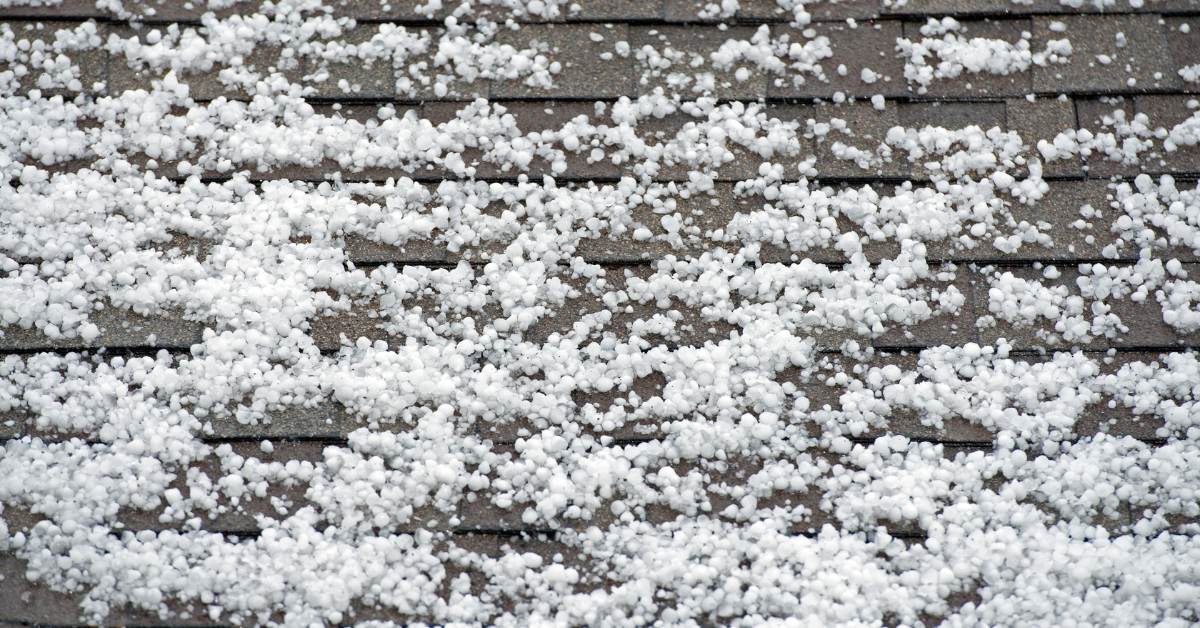
A test square is a marked-off 10-foot by 10-foot section of a roof slope that an adjuster or inspector uses to count functional hail hits in a consistent, sample-based way, instead of trying to eyeball an entire roof at once. As a general industry convention, somewhere around eight to ten functional hits inside a single test square is often treated as the point where that slope is considered damaged enough to warrant replacement, though the exact number varies by insurer and is not a fixed legal standard. If enough slopes qualify this way, the whole roof is typically recommended for replacement rather than a patchwork of repairs.
Here is what actually happens when someone chalks off a box on your roof, and what it means for you.
What a test square physically is
The name is literal. An inspector marks a 10-by-10-foot square, sometimes with chalk, sometimes just measured off, on a section of roof they have chosen to sample. It is meant to be placed somewhere representative of that slope's condition, not in an unusually damaged or unusually clean spot, and away from areas shaded by overhanging tree limbs, which can produce misleading results either way.
Inside that square, the inspector counts every mark that meets the definition of functional damage, meaning it actually compromises the shingle rather than just looking scuffed. That count becomes the basis for a decision about that slope, and often, by extension, the roof as a whole.
What counts as a "hit"
Not every mark inside the square counts. A hit that counts toward the threshold is functional damage: a bruise (a soft spot from a fractured mat under the surface), a crack, or a break in the shingle. Surface scuffing or minor granule displacement that does not compromise the shingle's ability to shed water is cosmetic, and cosmetic marks generally do not count toward the hit total, even if there are a lot of them.
This is the same functional-versus-cosmetic line covered in full in functional vs cosmetic hail damage, and it is why two roofs that look equally marked up from the driveway can produce very different test-square counts. A roof covered in cosmetic scuffing might score close to zero functional hits. A roof with fewer visible marks but real bruising underneath could score well above the threshold.
Why the threshold number varies, and why that matters to you
There is no single number written into Texas law that every insurer must use. The eight-to-ten hit range is a common industry convention, but individual carriers set their own internal standards, and some may weigh other factors alongside the raw count. This matters practically in two ways.
First, it means a number you read online, including the range in this article, is a general expectation, not a guarantee of how your specific insurer will rule. Second, it means the same roof, inspected by two different carriers or two different inspectors, could theoretically land on different sides of a replace-or-repair line. That is not necessarily a sign anyone is acting in bad faith. It is a reason to get your own documentation and, where the stakes are high enough, a second opinion, rather than treating any one count as automatically final.
Where the square gets placed, and why that is worth watching
Placement affects the outcome, which is exactly why it is worth paying attention to if you are present for the inspection. A square placed under a tree canopy that shielded part of the roof from hail will undercount real damage elsewhere on that slope. A square placed in an unusually concentrated impact zone, if one exists, could overstate the typical condition of the rest of the slope.
A reasonable inspection places test squares in locations that represent the slope's actual, typical condition, and often uses more than one square per slope on a larger roof. If you are present during an adjuster's inspection, it is entirely fair to ask where they are placing their squares and why, the same way you would ask any professional to explain their method. You do not need to argue the count in real time. You do need your own photo documentation of the whole roof, taken before the inspection if possible, so you have something to compare against later if the numbers seem inconsistent with what you saw yourself.
One slope qualifies. Does the whole roof get replaced?
Often, yes, though this again depends on the insurer and the specific policy. If enough slopes independently qualify for replacement under the test-square method, the common outcome is a recommendation to replace the entire roof rather than patch individual sections, partly because matching new shingles to old ones reliably across a partially replaced roof is difficult and partly because a roof is generally treated as one system rather than a set of independent slopes.
If only one slope qualifies while the others do not, the outcome is less predictable and depends more heavily on the specific insurer's practice. This is one of the areas where an independent second opinion, separate from both the adjuster and any contractor hoping to do the work, earns its keep.
What you can do as a homeowner during this process
- Have your own photos ready, taken from the ground and, ideally, from a prior professional inspection, before the adjuster arrives.
- Ask where test squares were placed if you are present, and note it for your own records.
- Do not let anyone remove shingles or debris before the inspection happens. Removing evidence before it is documented can undercut your own claim.
- Get the written report. Ask for the specific hit counts and slope-by-slope findings, not just a final yes-or-no on replacement.
- If the count seems inconsistent with what you documented yourself, ask questions or seek a second opinion before accepting a denial as final.
If you have not yet decided whether filing a claim makes sense given what you have found, that decision is covered separately in should you file a roof insurance claim in Texas. If the inspection comes back showing real, widespread functional damage, the next question is repair versus replace, walked through fully in hail damage: repair or replace. And for the full order of operations right after a storm, before any inspection happens at all, start with what to do in the first 72 hours.
More on why this site explains the process instead of steering you toward any particular outcome is on the about page and in how we decide what gets recommended on this site.
FAQ
Is the test square method required by Texas law?
No. It is a widely used industry inspection convention, not a legal requirement or a standard set by Texas statute. Insurers and independent inspectors use it because it gives a consistent, repeatable way to sample a roof rather than issuing a subjective overall impression.
How many test squares does an adjuster usually check?
It varies by roof size and the inspector's own practice, but larger roofs and roofs with multiple distinct slopes are generally sampled with more than one square so that no single spot has to represent the whole roof.
Can I request where the test square goes?
You can ask questions and note where squares were placed, and a reasonable inspector should be able to explain their choice. You generally cannot dictate the exact placement, but documenting the process yourself gives you something to reference if the outcome seems inconsistent with the roof's actual condition.
What happens if my roof scores just under the threshold?
The slope is typically evaluated for repair rather than replacement, though "just under" a convention-based threshold is exactly the kind of close call where a second opinion or a clearer look at borderline hits can be worth pursuing, particularly if your own documentation suggests more damage than the count reflects.