
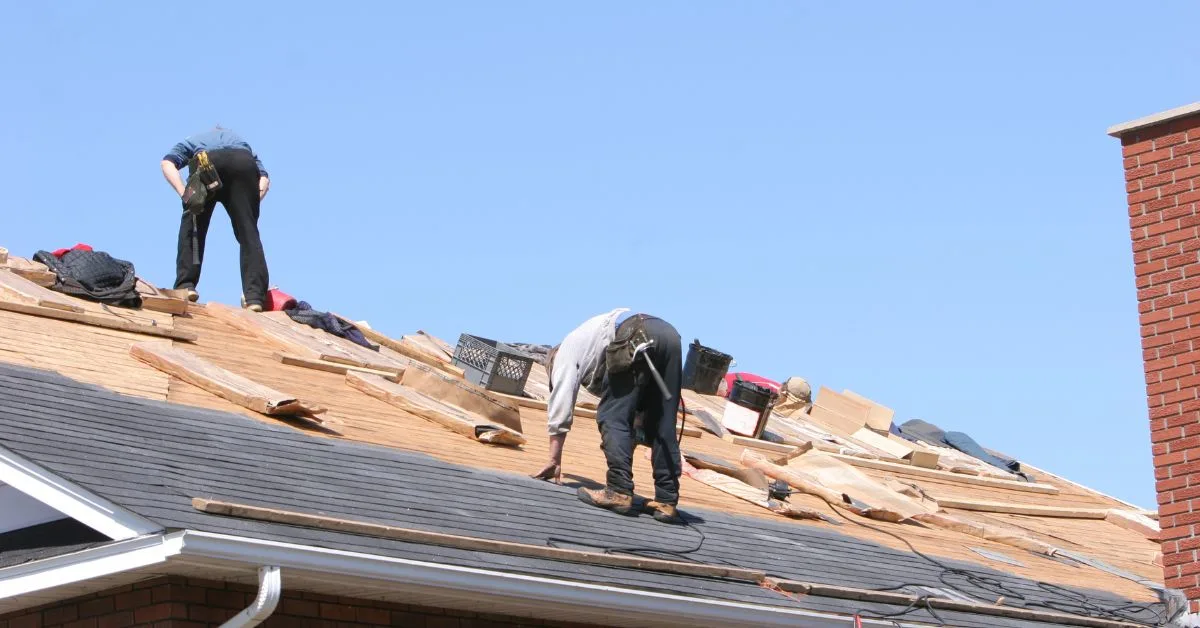
No. A street full of dumpsters and crews is not evidence about your roof, for two independent reasons. First, hail falls in a narrow, uneven corridor, and the difference between a battered roof and an untouched one can genuinely be a hundred feet. Second, a burst of replacement activity in one neighborhood is partly a weather event and partly a sales event, because a confirmed hail corridor is exactly where roofing companies concentrate their door-knocking. You can settle the question for yourself, for free, without letting anyone onto your property.
Here is why “everyone else got one” tells you almost nothing, and what does.
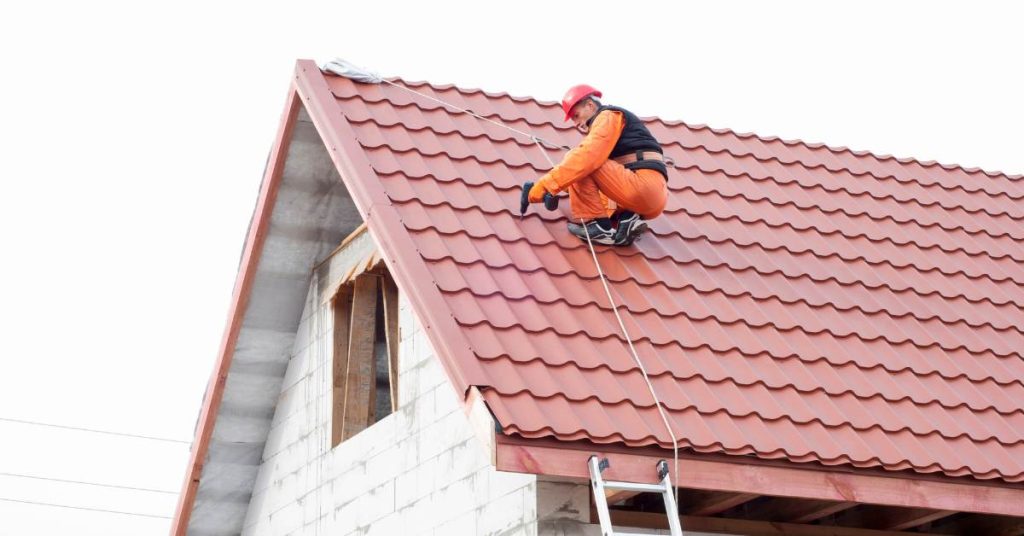
Why hail damage stops at a property line
Hail does not fall evenly across a storm. It falls in a swath: a long, comparatively narrow corridor traced by the part of the storm that is actually producing and dropping large stones. The severe thunderstorm warning polygon that covered your phone screen describes a much larger area than the corridor that actually did damage.
Inside that corridor the intensity is not uniform either. Stone size, fall angle and duration all vary across it, and the heaviest fall is usually concentrated in one part of the storm’s structure rather than spread across its whole width. Wind during the event tilts the fall, which is why one elevation of a house can be hammered and the opposite elevation left almost clean.
Put those together and the everyday result is exactly the thing that feels impossible: total loss on one block, nothing worth claiming two streets over, and a difference between neighbors on the same street. It is not a fluke, and it is not a sign anyone is being treated unfairly. It is the ordinary geometry of hail.
The same logic runs the other way, which is worth saying: your roof can be damaged when your immediate neighbor’s is not.
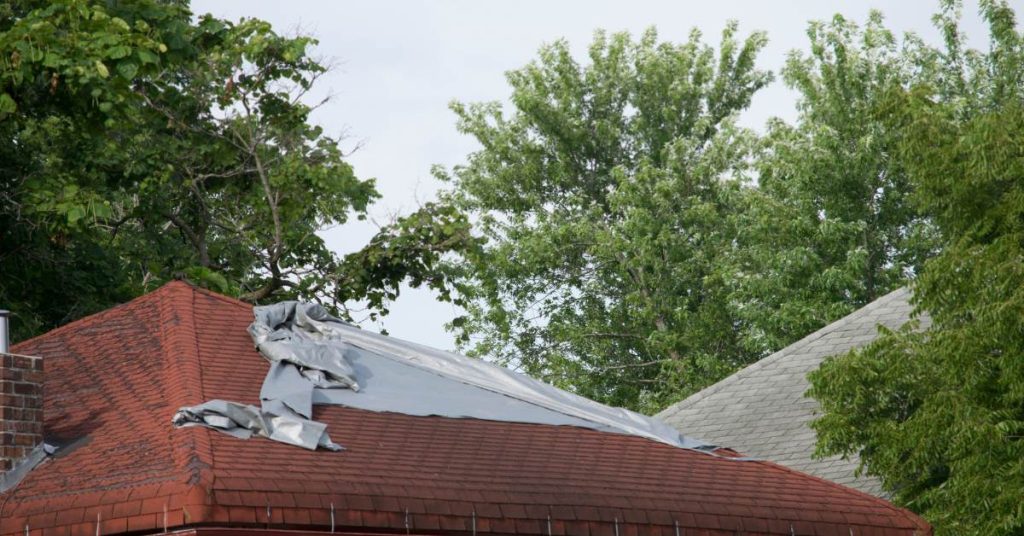
What a street full of new roofs is actually evidence of
It is good evidence that a hail event of some significance passed near you. That is genuinely useful and it is the reason to check.
It is weak evidence about your particular roof, for the reasons above.
And it is partly evidence of something else that nobody in the business will say out loud. When a hail corridor is confirmed, roofing companies and out-of-area crews concentrate on it, because a confirmed corridor is the highest-yield place to knock doors. Some of the roofs going on around you are the result of real damage found by competent people. Some are the result of a sustained, well-practiced sales effort in a neighborhood full of anxious homeowners. From the sidewalk the two look identical.
That is not a claim that your neighbors were wrong. It is a warning that the visible activity level in a neighborhood is not a measurement of the damage level, and treating it as one is how people end up filing claims on roofs that had nothing wrong with them.
If someone is currently on your porch making this exact argument, read storm chaser roofers in Texas: red flags to watch before you sign or agree to anything.
The two checks that settle it, neither of which costs you anything
Confirm the event and its date. Find out whether a hail-producing storm actually passed over your address, when, and what stone sizes were reported nearby. This is public information and you can look it up yourself rather than filling in a contractor’s lead form. The method is in which storm was it? matching damage to a dated hail event.
Look at your own property from the ground. Hail that is large enough to damage shingles almost always leaves corroborating marks on things you can inspect at eye level: gutters, downspouts, window screens, the fins on the outdoor air conditioning unit, the mailbox, the fence caps, painted deck boards. If a storm was severe enough to justify replacing every roof on your street and your soft metals are completely unmarked, that is meaningful information about where the corridor actually went.
The ground survey method is in how to check your roof for hail damage without climbing it, and what to photograph while you are out there is in photographing storm damage so it survives an adjuster’s review. Neither requires a ladder, and neither requires letting a salesperson onto the property.
If both checks come back positive, the next step is an inspection by someone qualified, and the sensible order of questions after that is in Hail Just Hit Your Roof: What to Do in the First 72 Hours.
The risk you are not worried about, and probably should be
The anxiety driving this question is loss aversion pointed in one direction: everyone else is getting something and you might miss out.
Point it the other way for a moment. Filing a claim on a roof that turns out to have no functional damage is not a neutral act. It consumes weeks. It puts a weather claim on your record. It usually ends with a finding that the damage does not meet the threshold for replacement, which means you have spent the time and gained nothing. And in Texas, where the windstorm and hail deductible on a homeowners policy is frequently expressed as a percentage of the dwelling coverage rather than a flat amount, even an approved claim on modest damage can pay out less than people expect once that deductible comes off.
That is why the two free checks come first. They cost you an afternoon and they let you enter the process, or decline to, on the basis of your own roof rather than your neighbor’s dumpster.
Whether to file at all, once you know what you actually have, is its own decision and it is worked through in should you file a roof insurance claim in Texas.
If your roof does turn out to be damaged, nothing was lost by checking first
Checking before claiming does not cost you the claim. Texas policies do not typically require you to file within days, and the practical deadlines involved are covered in how long after a storm can you still claim in Texas.
What you gain by checking first is a record you made yourself, before anyone with a financial interest in the outcome was on your property. That record is more useful than anything a same-day inspection produces, and it is the difference between entering the process informed and entering it because a stranger told you to.
The reason this site is willing to publish “you may well need to do nothing” is set out on the about page and in how we decide what gets recommended on this site.
FAQ
My neighbor’s claim was approved and mine was denied after the same storm. How is that possible?
Ordinarily, because the hail that fell on the two properties was not the same. Swaths are narrow and uneven, and adjacent addresses can sit on opposite sides of a boundary. If your own documentation does not match the finding, ask for the written report and consider an independent inspection.
Should I use the same roofer my neighbors used?
A neighbor’s recommendation is worth something, but shared use in a storm-hit neighborhood often reflects who knocked first rather than who is best. Verify the company independently before hiring anyone.
Is there a downside to just having someone inspect it, since it is free?
A free inspection is a sales visit, and it is performed by a party who profits if the answer is yes. That does not make it worthless, but it does mean the answer should be checked. Doing your own ground survey first means you can tell whether what you are told matches what you can see.
Does it hurt me if I wait and my neighbors all file now?
Your neighbors’ filings have no bearing on yours. What matters is your own policy’s notice requirements and the evidence quality, which degrades over time as weather and repairs change the record.