
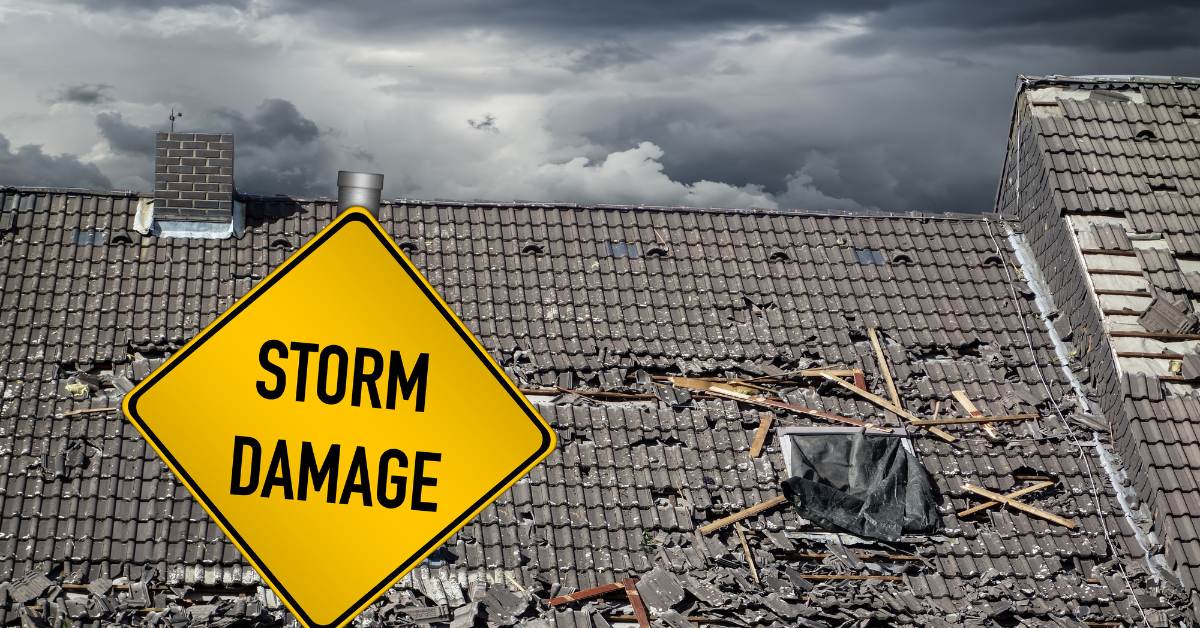
A tarp is a temporary cover installed over a damaged section of roof to stop water getting in until a real repair can be made. It is not a repair, and it is not decoration for your claim file. It matters because a standard homeowners policy places a duty on you to protect the property from further damage after a loss, and a documented temporary cover is how you meet that duty. The part that almost no page on this subject says plainly: installing one is professional work performed at height on a wet, storm-damaged surface, and it is one of the worst possible times for an untrained person to be on a roof.
Here is what a tarp actually does, what your policy expects, and how to handle the wait.
What a tarp is for, and what it is not
A tarp buys time. That is the entire function. It keeps rain out of an opening long enough for a licensed roofer to schedule a proper repair, which after a significant storm can be days or weeks because every roofer in the area is booked.
It does not fix anything. Water that got in before the tarp went on is already in the decking and the insulation and possibly the ceiling. A tarp does not reverse that, and leaving one in place for months is not a solution, it is a slowly failing stopgap that itself becomes a source of damage as it flaps, pools water and abrades the surface underneath.
It also does not prove a claim. Documentation proves a claim. The tarp proves you acted, which is a different and separate thing.
Why your policy cares that you did it
This is the part that reframes the whole decision, and it comes from the policy itself rather than from anyone’s opinion.
Standard homeowners policies contain a duties-after-loss condition that obliges the insured to take reasonable steps to protect the property from further damage after a covered loss, and to keep a record of what those steps cost. In practical terms that means: cover the opening, keep the receipt.
The Texas Department of Insurance says the same thing in its own storm recovery guidance for consumers, in plain language. Make temporary repairs to prevent more damage. Remove standing water. Cover broken windows and holes to keep rain out. Keep a list of the repairs and save receipts. And, importantly, do not make permanent repairs before the insurance adjuster has seen the damage.
Two consequences follow that most homeowners do not realize.
First, the cost of reasonable emergency mitigation is generally handled as part of the claim rather than as something you absorb on top of it. The precise treatment depends on your policy, so read your own coverage rather than relying on any figure published online.
Second, failing to mitigate can work against you. If a repairable opening is left uncovered through three more rain events and the damage triples, the argument that the additional damage was avoidable is available to the carrier. That is the actual risk in doing nothing, and it is a better reason to act than the urgency in a door-knocker’s pitch.
Why this is not a homeowner job
Every element of an emergency tarp is a hazard multiplier.
The surface is wet. It has just been rained on, and asphalt shingles are slick when wet in a way that dry ones are not. The structure underneath may be compromised in ways that are invisible from above: loosened decking, lifted fasteners, a soft spot where water has been sitting. The debris that came off the roof is now lying on the surface you would be standing on. The tarp itself becomes a sail in any residual wind, which is exactly the condition that puts a person off a roof. And it usually needs to be secured in a way that does not create new holes in a roof that is already leaking, which is a judgment call requiring knowledge of what is underneath.
This site does not publish a tarping method, and that is deliberate. There is no version of these instructions that is responsible to hand to someone standing in their yard at nine at night, and the ones that circulate online are written by companies who employ trained crews and would never send an untrained person up in those conditions themselves.
Call a licensed roofing contractor or a restoration company. Many run emergency response after major storms specifically for this. If nobody is available tonight, manage the water from inside, which is covered below.
What it costs, honestly
Search this and you will find confident dollar ranges everywhere. Every one of those pages is published by a company that sells the service, and this site does not treat a seller’s marketing page as a source for a number.
What is worth knowing is what drives the price, because that is what lets you judge a quote:
- Dispatch and timing. After-hours and immediately-post-storm response costs more than a scheduled visit, for the same reason any emergency trade call does.
- Labor and crew size, which is the dominant cost. The tarp material itself is a small fraction of the bill.
- The size of the area being covered and the pitch of the roof, since steeper roofs require more setup and more fall protection.
- Access, meaning height, landscaping, and whether equipment can get near the house.
- Local demand, which after a widespread hail event in DFW can be extreme for a week or two.
Get a written price before work starts, even in an emergency, and keep the invoice. If you want to understand the anatomy of a roofing document generally, that is set out in how to read a roofing estimate line by line.
Be particularly careful about anyone who arrives unsolicited offering an emergency tarp, especially if the offer is bundled with paperwork to sign. The pattern is documented in storm chaser roofers in Texas: red flags to watch.
What to do while you wait for someone to come
Everything on this list happens indoors or at ground level.
- Move what you can out from under the leak. Furniture, electronics, rugs, anything absorbent.
- Contain the water. Buckets, and a towel in the bucket cuts the noise and the splash.
- If the ceiling is bulging, that is trapped water and it will eventually come down on its own. Move everything out from under it and keep people away. Do not stand under it to deal with it.
- Do not touch anything electrical near water, and if water is running near a fixture, a ceiling fan or a panel, stop and call a licensed electrician. Water and household wiring is not a homeowner judgment call.
- Photograph everything as it happens, including the interior, before you clean anything up. What that record needs to contain is set out in photographing storm damage so it survives an adjuster’s review.
- Report the loss to your carrier as soon as you reasonably can.
Tarp now or wait for the adjuster?
Tarp now. This is the one area where waiting is the wrong instinct, and it is worth separating two different instructions people confuse.
TDI’s guidance is that you should make temporary repairs to prevent further damage, and that you should not make permanent repairs before the adjuster sees the damage. A tarp is a temporary repair. It is exactly what that guidance is describing, and it does not compromise the inspection because the adjuster can lift it.
Replacing shingles, redecking a section or having a crew begin a real repair before the inspection is the thing to avoid. If a contractor tells you the permanent work has to start tonight, that is a sales position rather than a technical one.
For the wider order of operations in the first days after a storm, start with Hail Just Hit Your Roof: What to Do in the First 72 Hours. If the trigger for all of this was shingles going missing and you are still deciding how urgent it is, that judgment is in missing shingles after a windstorm.
Why this site publishes the version that ends “do not do this yourself” is explained on the about page.
FAQ
Does insurance pay for a roof tarp?
Reasonable emergency measures to prevent further damage are generally handled within a claim, because policies obligate you to take them. The specifics are set by your own policy language, so read it and keep every receipt and photograph. No article can tell you what your carrier will reimburse.
Can I put a tarp on myself to save money?
This site does not recommend it and does not publish a method. A wet, storm-damaged roof in the hours after a storm is among the most dangerous places a homeowner can choose to stand, and the savings are not proportionate to the risk.
How long can a tarp stay on?
It is a short-term measure, measured in days to weeks rather than months. Tarps degrade in sun and wind, pool water, and can damage the surface they are protecting. If a permanent repair keeps getting pushed back, that is worth escalating with the roofer and the carrier rather than accepting.
Should I report the damage before or after the tarp goes on?
Report as soon as you reasonably can, and do not delay protective action waiting for permission. Photograph the damage before the tarp goes on so the record shows the condition underneath it.