
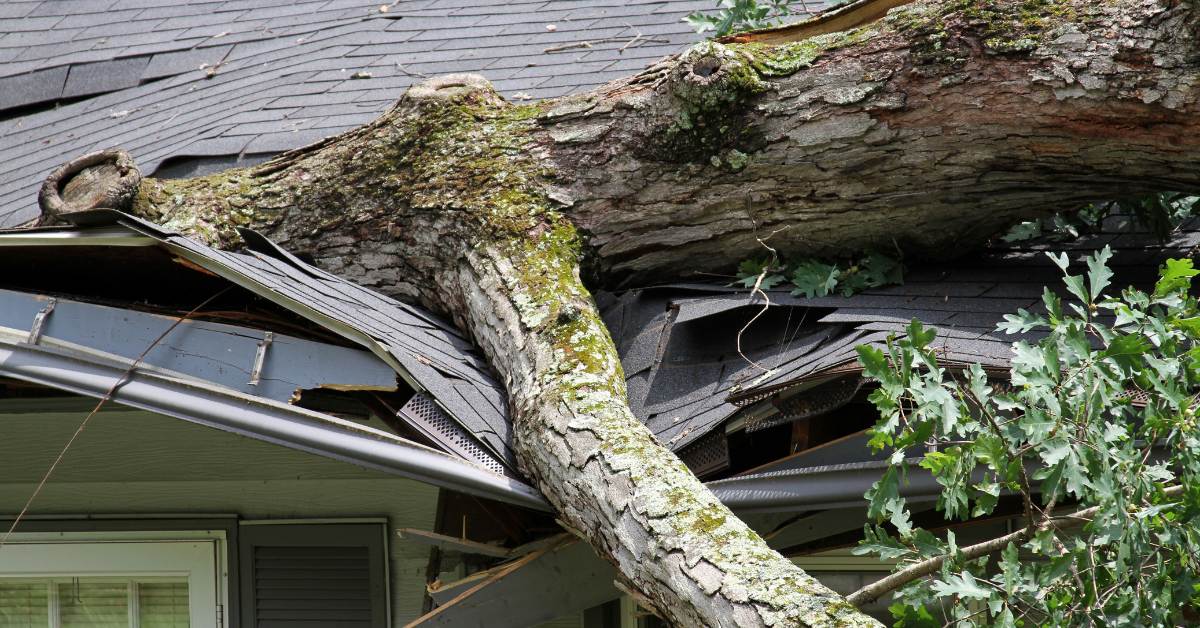
If a tree has landed on your roof, get everyone and pets out and away from the house, especially with sagging, new cracking, or sounds of stress inside. Do not climb up to look, and stay out of the attic under the impact zone. Treat any downed line near the tree as live. Whether the structure is actually safe is a call for a structural engineer or licensed roofer, not something to judge yourself.
Everything below is written in that order on purpose. This is the one topic in this cluster where the physical safety of the people in the house outranks the insurance claim, and it should stay that way for you too.
Safety first: the signs that mean leave the house, not inspect it
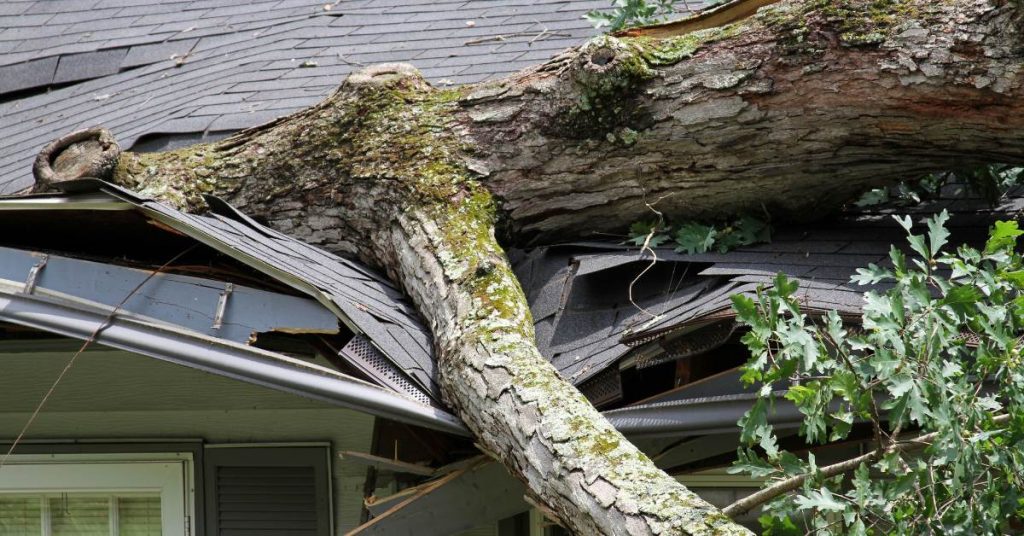
Some signs mean get out now and sort out the rest later. Watch for a ceiling or section of roofline that looks visibly lower or sagging compared to the rest, new cracks in drywall, plaster, or around door and window frames that were not there before, doors or windows that suddenly stick or will not close right, popping or creaking sounds from the area under the tree, or water coming in fast rather than a slow drip. Any one of these is a reason to get everyone out and call 911 if you are not sure whether it is safe to stay even long enough to gather belongings.
If none of those signs are present and the tree appears to be resting on an otherwise intact section of roof, you likely have time to wait for daylight and a professional. Even then, stay out of the room directly underneath the impact area and keep that door closed until someone qualified has looked at it.
Power lines and gas: what to do and who to call, not what to touch
If any power line is down, is touching the tree, or is anywhere near it, stay away and treat it as energized no matter how it looks. A line that looks dead is not something to test. Call your electric utility and 911 if a line is down or arcing.
If you smell gas, leave the house immediately, do not operate any light switch or anything electrical on your way out, and call your gas utility or 911 once you are outside and clear of the house.
Nobody should approach, touch, or attempt to move any part of the tree or its branches near a power line or a suspected gas line, under any circumstances. This is strictly a stay-away-and-call situation, not a homeowner task at any stage.
“It’s just resting there” is not the same as “it’s safe”: why a professional makes this call, not you
A limb that looks like it is simply leaning on the roof surface can have already punched through the decking, cracked a rafter, or shifted the framing underneath without any of that being visible from the ground or even from inside the attic. This is not something a homeowner can reliably judge by eye, and honestly, it is not always something a general roofer can judge by eye either.
The people equipped to answer that question are a structural engineer or a licensed roofer who inspects the framing directly, in person. This article is not going to give you a rule of thumb, a size, or a weight to compare your situation against, because there is not an honest version of that rule. The variables that actually decide it, how the limb landed, what it hit, how the framing responded, only resolve with someone qualified looking at the actual damage.
What NOT to do yourself: climbing near it, cutting it, moving it
Do not climb onto the roof to look closer, and do not climb the tree either. A roof with a tree resting on it is already compromised in ways you cannot fully see, and your weight on top of that is a real fall risk, not a theoretical one.
Do not attempt to cut branches yourself. A limb or trunk section under tension from a fall can release that tension violently when cut, and that is true whether you are using a hand saw or a chainsaw. This is specialized, dangerous work, and it is why tree and storm-debris removal companies exist as their own trade.
Do not try to move, pull, or shift the limb off the roof yourself, and do not send a family member up to attempt it either. Removing a tree safely from a roof takes equipment, rigging, and training that a homeowner does not have on hand, and getting it wrong can do more damage to the structure or to a person than leaving it in place until a professional arrives.
Insurance: what is typically covered, what usually is not, and what to document
A standard homeowners policy typically responds when a tree comes down onto your house from a covered peril, wind or a storm being the common ones. Where it gets more complicated is when the tree was already dead, diseased, or visibly hazardous and the homeowner knew about it and did not act. That distinction between storm-caused damage and neglect is a coverage question your specific policy answers, not something this article can settle for you.
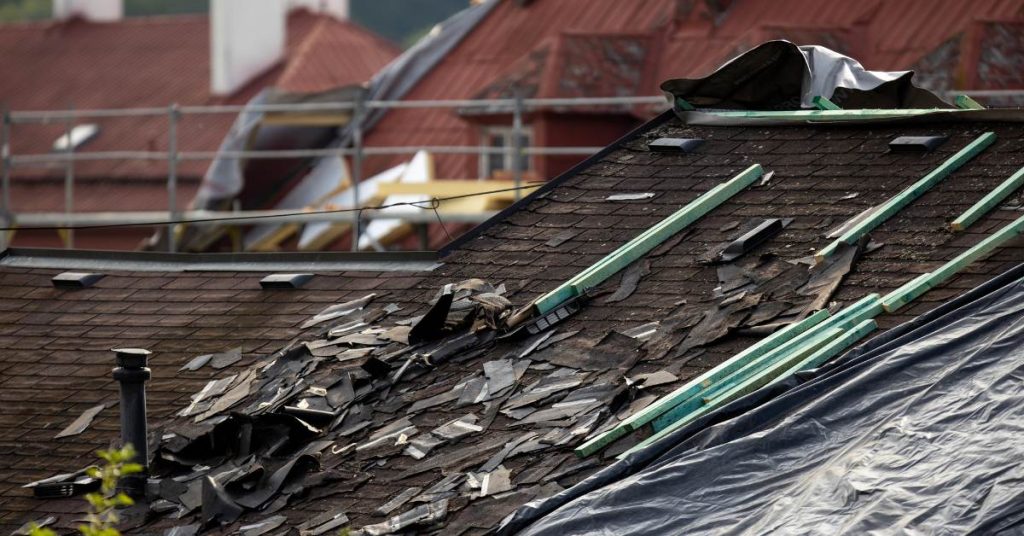
The documentation discipline here is the same as everywhere else in this cluster. Photograph the damage from multiple angles, including anything visible before removal work begins, and do not let permanent repairs start before the adjuster has seen it, the same rule covered in documenting storm damage for your claim. If you are still deciding whether the situation is even worth a claim once the tree is safely off, work through that decision here rather than filing on reflex.
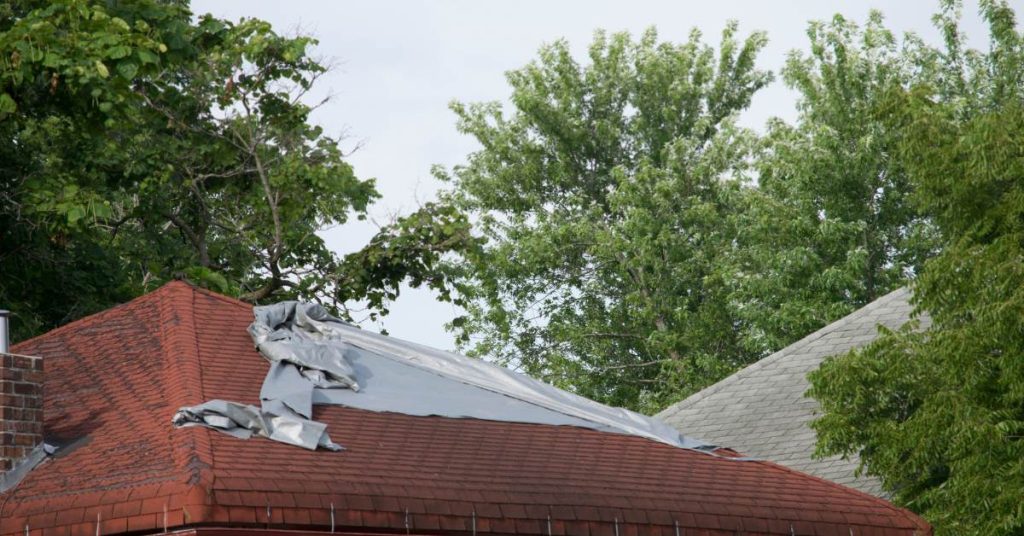
Tree and debris removal is typically billed and handled as its own line item, separate from the roof repair itself, and cost varies too much by tree size and access to state a figure here. Get your own written quote once a professional has assessed it. If the tree removal reveals shingle or deck damage that needs a temporary cover while the real repair is scheduled, that is the point where emergency tarping becomes relevant, and it is still not a job to do yourself.

FAQ
Is it safe to sleep in my house with a tree on the roof?
It depends entirely on whether you have any of the warning signs described above: visible sagging, new cracking, doors that suddenly stick, or stress sounds. If you see any of those, do not stay in the house until it has been assessed. If none are present, most homeowners can wait for daylight and a professional, while staying out of the room directly under the impact.
Should I try to cover the hole with a tarp myself?
No. Do not climb onto a roof with a tree resting on it for any reason, including to tarp it. Temporary covering, once it is safe to do, is a job for whoever removes the tree or for a roofer, not for a homeowner on a ladder.
Will my homeowners insurance pay to remove the tree from my roof?
Typically homeowners coverage responds to storm-caused tree damage, though whether tree removal itself is covered, and how, depends on your specific policy. This article cannot predict your claim’s outcome; your policy and your insurer’s claims department are the actual answer here.
How long can I wait before calling someone?
If you have any of the safety warning signs described above, do not wait at all, get out and call for help. If the situation looks stable and none of those signs are present, calling first thing the next morning is reasonable, but avoid the area under the tree in the meantime.
Related reading: Start with Hail Just Hit Your Roof: What to Do in the First 72 Hours for the broader sequence this fits into. Once the tree is safely handled, document the damage so it survives an adjuster’s review and decide whether filing a claim makes sense. If temporary covering is needed afterward, see emergency tarping. Background on this site is on the About page.